

How I Build Characters with a Brush Instead of a Pen
A character study in progress—literally

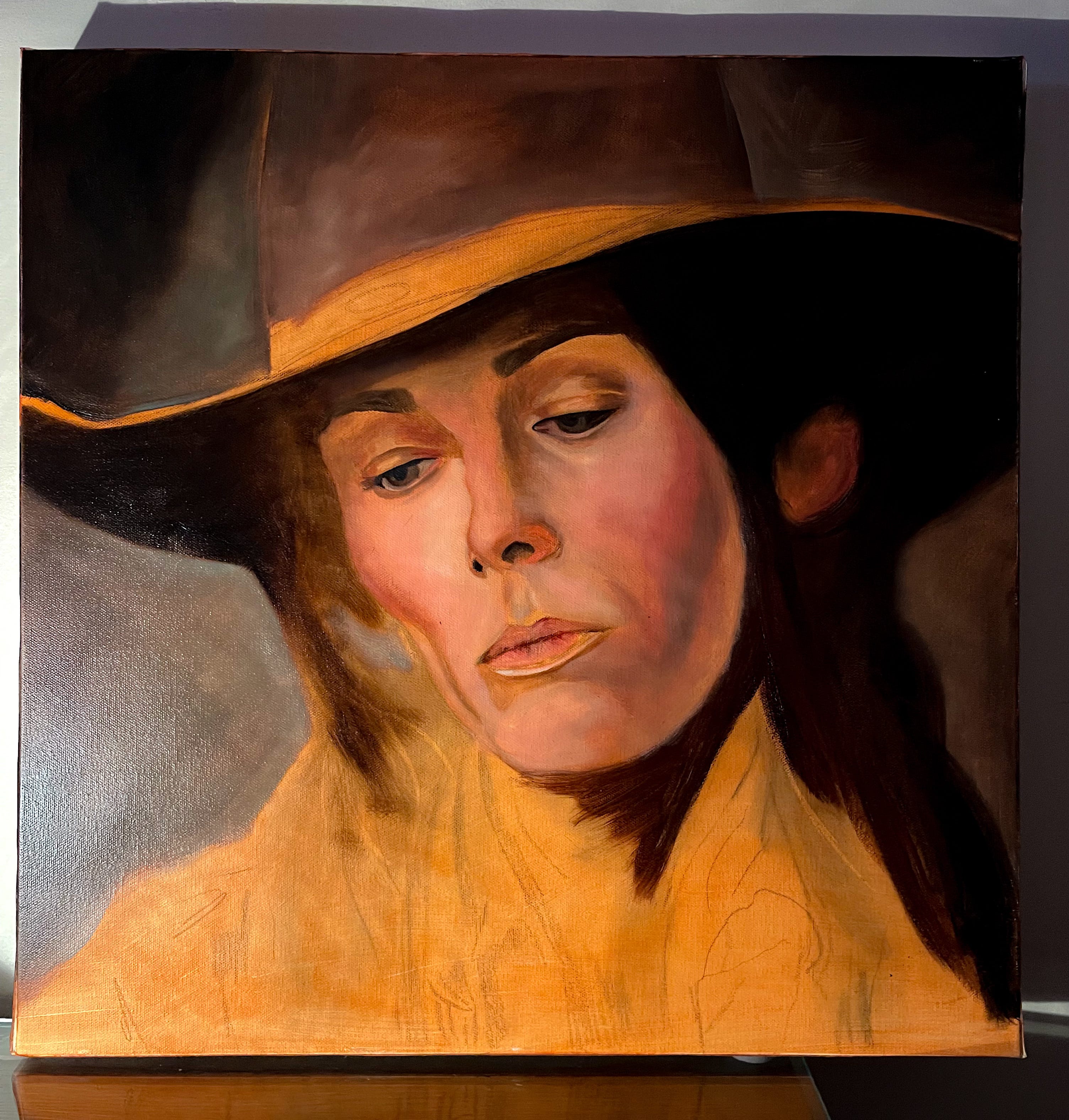
I don’t usually cross the streams between my art blog and this newsletter, but I painted something this week that wouldn’t let me go. And since she’s a character from one of my upcoming books, I thought you might want to meet her—not through her story (yet), but through the oils that brought her to life first.
This piece originally appeared on my ArtAlive blog, but it felt right to share it here too. For those of you who are also writers, I think you’ll recognize that strange dance between the people we create and the people who create themselves despite us.
For everyone else? Consider this a behind-the-scenes look at how one stubborn rancher demanded to be painted before she’d tell me her secrets.
Here goes...
How we painted her into being—together
Fall and winter own me.
That’s just the truth of running an imprint. Deadlines stack up like dirty dishes. Editorial work bleeds into release schedules. Everything needs doing yesterday, and rest becomes that thing other people get to enjoy. I’m fueled by coffee and sheer stubbornness at this point, and honestly? I can barely remember what a full night’s sleep feels like.
So guess what gets sacrificed first?
My art. Every single time.
The paints dry out. The sketchbooks get shoved aside with promises I’ll get back to them “when things calm down.” We both know that’s a lie, but I tell it to myself anyway.
And then a story shows up.
Not with fireworks. Not demanding anything. Just a whisper. A tug at the part of me that won’t stay buried no matter how busy I get. And once the story arrives, the images follow. A face. A gesture. The way someone stands when the wind cuts cold, or stares out a window like she’s waiting for a truth she’s too scared to speak.
That’s when I know I’m done for.
Because once I start seeing my characters, painting them stops being optional.
This heroine—my latest obsession—snuck up on me. I’ve already drafted her story, messy and raw, but I couldn’t stop seeing her face. She wouldn’t tell me her name yet. Some characters introduce themselves politely. Others make you earn every secret. She’s definitely the latter.
So I shoved the mountain of work aside, unrolled my sketch paper, and started chasing her.
A dozen sketches later, she still wouldn’t hold still. But she was getting clearer. A line here. A shadow there. The tilt of her chin that says everything she refuses to put into words. Now the painting’s taking shape, and with every brushstroke, she’s becoming more real.
What the Brush Knows That the Pen Doesn’t
Here’s what painting does that writing can’t. It forces me to stop thinking and simply be.
When I write, I’m making decisions. Choosing words. Constructing sentences. It’s not that I’m not feeling. I am— I feel it all. That’s what writing deep POV is about. But when I write, I’m building scenes brick by brick. It’s deliberate. Controlled. My brain runs the show.
But when I paint? My hands take over and I find myself zoning out.
The brush moves before I can second-guess it. Colors mix in ways I didn’t plan. And suddenly, I’m not directing this woman’s story—I’m discovering it. The shadows under her eyes tell me she’s tired, bone-deep tired, in a way I hadn’t written yet. The set of her jaw says she’s been holding something back so long she’s forgotten how to let it go. The way her hair falls, slightly undone, whispers that she used to care about perfection but gave up somewhere along the way.
She’s guarded. That much I knew from the draft.
But painting her showed me why. There’s a softness in her eyes that contradicts everything else about her posture. She wants to trust someone. She’s just been burned too many times to risk it.
I’m hoping one day I’ll know her name. Not because I decided it—because she was ready to tell me.
And that’s when I understood her story wasn’t about learning to trust again. It was about learning she was worth trusting in the first place.
The brush knew before I did.
What I See When I Step Back
The painting’s not finished yet, but I keep walking away from the easel to stare at her.
She’s looking down—not at anything in particular, just away. Away from whoever might be watching. Away from questions she doesn’t want to answer. That downward gaze carries more weight than any eye contact ever could.
The hat brim catches all the light, that warm gold painting a halo she doesn’t believe she deserves. There’s warmth in the color—burnt sienna and amber that suggests late sun or firelight—but she’s holding herself apart from it. Wearing it without letting it in.
I haven’t finished her shirt yet. You can still see the underpainting, the sketch lines where I’m working out how she holds herself. But her face—that’s where she showed up first. Where she demanded to be seen even as she refuses to look at anyone.
The contrast between the dark hat, the shadowed background, and those golden tones says everything about her. She’s caught between darkness and warmth, not quite settled in either. She’s been burned before. Literally and figuratively. Marriage that didn’t last. Dreams that crumbled. A ranch she’s holding onto with both hands because it’s the only thing that hasn’t failed her yet.
There are no hands in this painting. I thought about including them—thought about showing how she might clasp them together or let them hang loose, uncertain. But this moment didn’t need them. This moment is all about that face. That gaze. The weight of everything she’s carrying that she won’t speak out loud.
The painting captured something I’m still trying to articulate in the manuscript. That moment when someone’s too tired to pretend anymore but too scared to stop pretending. When the walls are still up but starting to crack. When she’s almost ready to believe someone might stay—but not quite.
She’s not there yet. But she’s close.
And now I know exactly how to write the scene where she finally lifts her eyes.